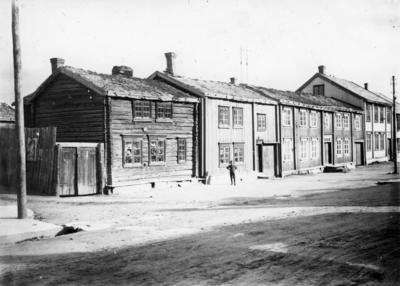
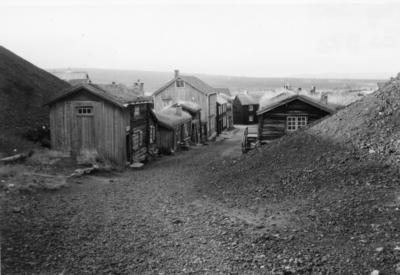
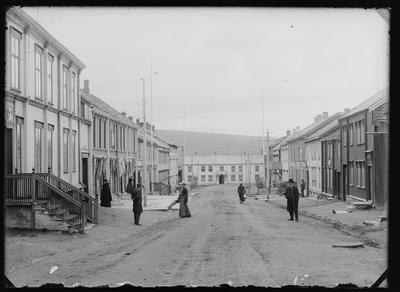
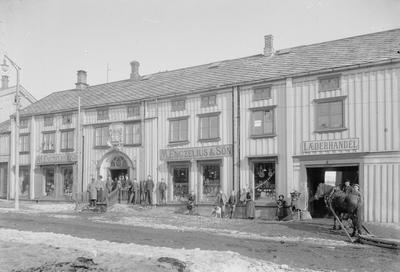
The people and the farmsRunning the farms was an important part of the livelihood for the workers and the management of the copper works. The mining centre of Røros was built up of mountain farms in a town. The people and the farms Running the farms was an important part of the livelihood for the workers and the management of the copper works. The mining centre of Røros was built up of mountain farms in a town. A house in Sleggveien – Tyristuggu – house no. 398 The houses in the upper part of Sleggveien have a great deal to tell us about a certain period in the mining town’s social history. In the small houses, that had neither cattle Houses nor stables, lived daily paid labourers, widows, other breadwinners and wanderers An Executive’s Accomodation – The General Manager’s House, No. 17 Many of the Company’s executives built their houses in Bergmannsgata or Hyttegaten as it was previously called. They were large buildings, which reflect the position of the upper classes in the mining community at the time they were built. One of the worker’s houses – Rasmusgården – house no. 7 Rasmusgaarden, which is situated at the bottom of Bergmannsgata, is a typical example of one of the worker’s houses. Holding two jobs, that of working in the mine or elsewhere for the Company and looking after one’s own livestock was typical for the people of Røros right up to the 1970s. It was essential to keep animals to ensure a decent standard of living. A Trading House – Leighgården – house No. 16 Morten Leigh (1778 – 1816), a tradesman, arrived in Røros during the early part of the 1800s. In 1806 he purchased his own building, house no.16 in Bergmannsgata. At that time Røros Copper Works had a monopoly on the purchase and sale of all goods and provisions to the employees of the Company. Films1/32/33/3 Open or close caption